Cooling System Repair
Complete Cooling System Inspection & Diagnosis
The cooling system consists of a cooling fan, water pump, thermostat, radiator, heater core, heater valve, and various other parts that primarily work together to dissipate and remove heat from a vehicle’s engine. Your vehicle’s cooling system is responsible for reducing the temperature inside your engine and preventing possible overheating. Excess heat can build in a variety of places in your vehicle’s engine. When the engine reaches maximum operating temperatures, the thermostat opens and releases antifreeze from the engine to the radiator, which initiates the circulatory flow to absorb excess heat. The antifreeze is also responsible for keeping other engine fluids from boiling or freezing. After the antifreeze flows through the engine, it cycles back to the radiator, where the excess heat escapes through the radiator’s walls. The antifreeze is cooled by the cooling fan and readied to be re-released into the engine to dissipate additional heat.
Benefits of Cooling System Repair
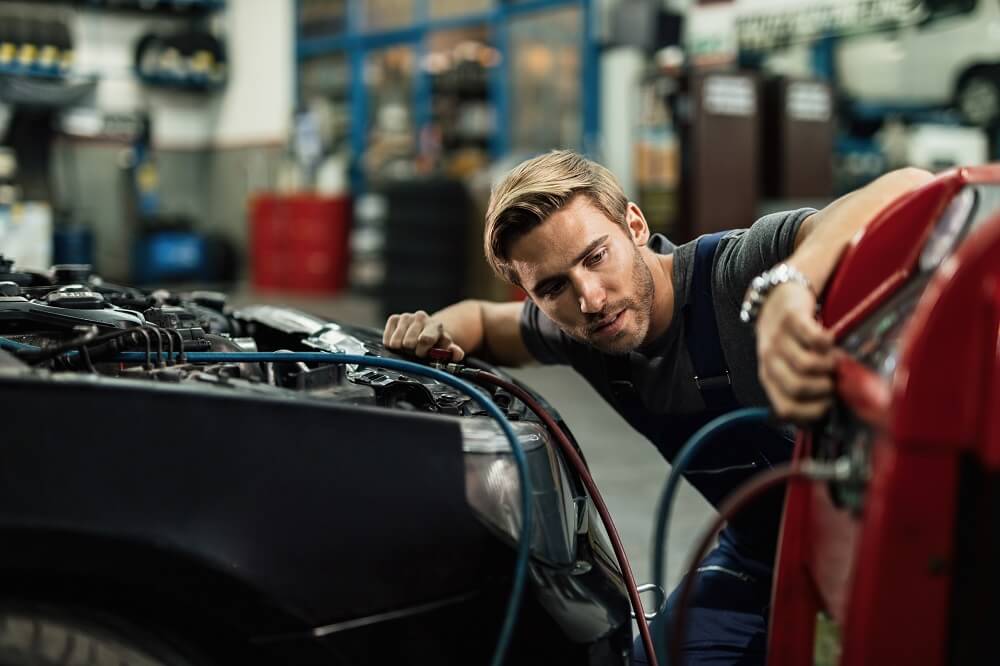
Over time, antifreeze breaks down and loses its efficiency. If not drained and replaced, old antifreeze can lead to corrosion. During a cooling system flush and fill, our staff will drain the antifreeze from the radiator, flush the cooling system, and fill the radiator with new antifreeze. The cooling system’s cooling fan circulates air through the radiator and passes excess heat out of the engine. If the cooling fan malfunctions, your vehicle’s engine will overheat. During an inspection of the cooling system service, our experts will check the cooling fan for damage and the fan belt for cracks. Because the radiator is responsible for cooling the antifreeze as it circulates throughout the cooling system, a leak or a broken radiator hose can lead to major engine failure. A radiator pressure test is one way we can check for potential leaks or radiator damage. Ultimately, neglecting basic cooling system and radiator maintenance can lead to a potential radiator replacement and major engine or radiator repairs down the road.
Ambarsariya Car Mechanic proudly serves the Cooling System Repair needs of customers in Craigieburn, VIC, Australia, Victoria and surrounding areas
Frequently Asked Questions
1. What does a vehicle cooling system do?
A vehicle’s cooling system regulates engine temperature by circulating coolant through the engine and radiator. It helps prevent overheating, protects engine components, and ensures optimal vehicle performance.
2. What are the signs of a cooling system problem?
Common signs include engine overheating, coolant leaks, low coolant levels, steam coming from under the bonnet, a sweet smell from the engine bay, or the temperature gauge reading higher than normal.
3. How often should coolant be replaced?
Coolant replacement intervals vary by manufacturer, but most vehicles require a coolant flush and replacement every 2–5 years. Regular coolant maintenance helps prevent corrosion and cooling system failure.
4. What is included in a cooling system inspection?
Our cooling system inspection includes checking coolant levels and condition, inspecting the radiator, hoses, water pump, thermostat, cooling fan, belts, and performing pressure tests to identify leaks or potential issues.
5. Why is cooling system maintenance important?
Regular cooling system maintenance helps prevent engine overheating, reduces the risk of costly engine repairs, improves vehicle reliability, and extends the lifespan of critical engine components.